
Introduction
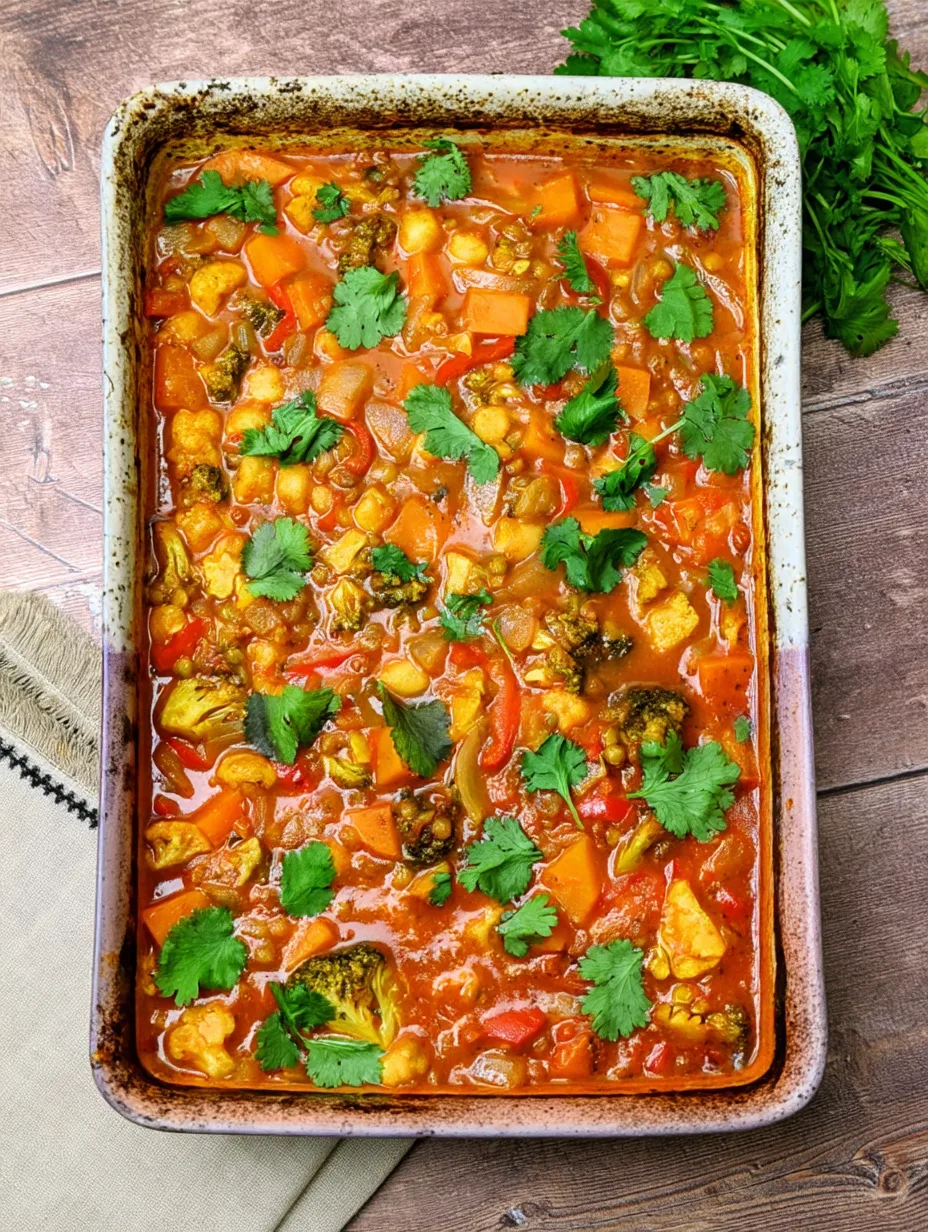
Warm, aromatic, and packed with colorful vegetables, Easy Roasted Vegetable Curry brings together the comforting flavors of Indian-inspired spices and the irresistible sweetness of oven-roasted produce. Roasting the vegetables first gives them beautifully caramelized edges while keeping their centers tender, creating a delicious contrast in every bite. Simmered in a creamy coconut curry sauce, this satisfying meal transforms simple pantry staples into something special. Whether you need a cozy weeknight dinner or a nourishing meat-free meal, this recipe delivers incredible flavor without complicated preparation. You’ll learn how to roast, season, and simmer everything to perfection.
Why You’ll Love This Recipe
There are plenty of reasons to make Easy Roasted Vegetable Curry a regular part of your dinner rotation. First, roasting the vegetables develops a deeper, sweeter flavor than simply simmering them in sauce. Golden cauliflower, tender sweet potatoes, and caramelized bell peppers bring wonderful texture and color to the finished dish.
The creamy coconut milk balances the warming spices, creating a rich sauce without requiring dairy or heavy cream. Meanwhile, curry powder, garlic, ginger, and a touch of chili add layers of flavor that make every spoonful delicious.
Another advantage is flexibility. You can use whatever vegetables you have available, making this recipe an excellent way to reduce food waste and enjoy seasonal produce. The preparation also stays manageable: roast the vegetables, prepare the sauce, and combine everything for a comforting dinner.
This curry works beautifully for meal prep, too. The flavors develop as it rests, making leftovers especially satisfying the next day. Serve it over fluffy rice or scoop it up with warm naan for a complete, plant-based meal.
Ingredients
The beauty of Easy Roasted Vegetable Curry lies in its simple ingredients and bold flavors. These measurements make approximately four generous servings.
-
Cauliflower florets: 3 cups (300 g). They become golden outside and tender inside.
-
Sweet potatoes: 2 medium, about 400 g, peeled and diced into bite-sized cubes for natural sweetness.
-
Red bell pepper: 1 large (150 g), chopped for color and sweetness.
-
Red onion: 1 medium (150 g), cut into wedges for caramelized edges.
-
Olive oil: 2 tablespoons (30 ml), divided between roasting and cooking the aromatics.
-
Garlic: 3 cloves, minced for savory depth.
-
Fresh ginger: 1 tablespoon (15 g), finely grated for a warm, zesty flavor.
-
Curry powder: 2 tablespoons (12–16 g), depending on its strength.
-
Ground cumin: 1 teaspoon (2 g), for earthy warmth.
-
Ground turmeric: ½ teaspoon (1–2 g), for color and subtle earthiness.
-
Full-fat coconut milk: 1 can (400 ml), for a creamy sauce.
-
Vegetable broth: ½ cup (120 ml), to adjust the consistency.
-
Chopped tomatoes: 1 cup (240 g), canned or fresh.
-
Fresh lime juice: 1 tablespoon (15 ml), to brighten the sauce.
-
Salt and black pepper: To taste.
-
Fresh cilantro: 2 tablespoons (8 g), chopped for garnish.
Serve with 2 cups (370 g) cooked basmati rice or warm naan, as desired.
Pro Tips
Three simple techniques make a noticeable difference in your curry.
1. Give the vegetables enough space. Spread them in a single layer on a large baking sheet. When vegetables sit too close together, they release moisture and steam instead of developing golden edges. Use two trays if necessary, especially when your oven runs small. A little space encourages caramelization and gives the finished curry a richer flavor.
2. Cut everything into similar-sized pieces. Aim for sweet potato cubes around ¾ inch (2 cm) and cauliflower florets of a similar size. This helps the vegetables cook evenly. Keep in mind that sweet potatoes may need slightly longer than peppers, so check their tenderness before removing the tray from the oven.
3. Build flavor before adding coconut milk. Gently cook the onion, garlic, and ginger, then stir in the spices for about 30 seconds. This brief step releases their aromas and creates a fragrant foundation for the sauce. Avoid scorching the spices, as burnt curry powder can taste bitter. Add the coconut milk and tomatoes promptly, then simmer gently rather than boiling vigorously.
For the best finish, add lime juice after simmering and taste before serving. A little extra salt or acidity can bring all the flavors into balance.
Step-by-Step Instructions
Step 1: Prepare the vegetables
Preheat your oven to 425°F (220°C). Line a large baking sheet with parchment paper for easier cleanup.
Wash and dry the cauliflower, sweet potatoes, bell pepper, and red onion. Cut them into evenly sized pieces so they cook at a similar rate. Peel the sweet potatoes before dicing them, and separate the cauliflower into small florets.
Place the vegetables in a large bowl. Add 1 tablespoon of olive oil, a generous pinch of salt, and freshly ground black pepper. Toss until every piece receives a light coating.
Step 2: Roast until golden
Spread the vegetables across the prepared baking sheet in a single layer. Roast for 25–35 minutes, turning them halfway through cooking.
Check the sweet potatoes with a fork. They should feel tender without falling apart, while the cauliflower should have golden-brown edges. The peppers and onions will soften and develop a lovely sweetness.
If your vegetables need additional color, roast them for another 5 minutes. Avoid cooking them until completely mushy because they will simmer briefly in the curry sauce later.
Step 3: Start the curry sauce
While the vegetables roast, heat the remaining tablespoon of olive oil in a large skillet or Dutch oven over medium heat.
Add the minced garlic and grated ginger. Cook for about 30–60 seconds, stirring constantly until fragrant. Add the curry powder, cumin, and turmeric. Stir for another 30 seconds to release the spices’ aromas.
If the pan looks dry, add a small splash of vegetable broth. Keep the heat moderate so the garlic and spices do not burn.
Step 4: Make the coconut curry
Pour in the chopped tomatoes, coconut milk, and vegetable broth. Stir thoroughly, scraping the bottom of the pan to incorporate the flavorful spices.
Bring the mixture to a gentle simmer, then reduce the heat to medium-low. Let the sauce cook for 8–10 minutes, stirring occasionally. It should become slightly thicker and develop a rich, fragrant aroma.
Taste the sauce and season with salt and black pepper. If you prefer a milder curry, use less chili or choose a mild curry powder. For more heat, add a pinch of cayenne pepper or red chili flakes.
Step 5: Combine the roasted vegetables
Gently fold the roasted vegetables into the coconut curry sauce. Stir carefully so the tender sweet potatoes and cauliflower keep their shape.
Let everything simmer for another 3–5 minutes, just long enough for the vegetables to absorb some of the sauce’s flavor. If the curry seems too thick, add a splash of broth. If it looks too thin, simmer uncovered for a few extra minutes.
Step 6: Finish and serve
Remove the pan from the heat and stir in the fresh lime juice. Taste once more and adjust the salt, pepper, or acidity as needed.
Scatter chopped cilantro over the top for a fresh, herbal finish. Serve your Easy Roasted Vegetable Curry immediately over fluffy basmati rice, alongside warm naan, or with another favorite grain.
For an extra-special presentation, finish each bowl with a lime wedge and a sprinkle of fresh cilantro. The contrast between the creamy sauce, caramelized vegetables, and bright citrus makes every serving memorable.

Variations
One of the best features of Easy Roasted Vegetable Curry is how easily you can adapt it to suit your preferences.
1. Add chickpeas for extra protein. Stir in one drained and rinsed 15-ounce (425 g) can of chickpeas when you add the roasted vegetables. They make the curry heartier and add a pleasant, creamy texture. You can also add cooked lentils for a different plant-based protein option.
2. Make it spicier. Add ½ teaspoon of chili flakes or a small amount of finely chopped fresh chili to the garlic and ginger. For a smoky flavor, try a pinch of smoked paprika. Start with a small amount and adjust after tasting the sauce.
3. Change the vegetables. Replace the sweet potatoes with butternut squash, carrots, or potatoes. Broccoli, zucchini, and eggplant also work well, although softer vegetables may need less roasting time. For a lighter sauce, substitute light coconut milk, keeping in mind that the curry will taste less rich and creamy.
You can also make the dish nut-free and naturally dairy-free by using coconut milk and checking that your curry powder contains no unwanted additives.
Storage and Serving
Let leftover Easy Roasted Vegetable Curry cool slightly before transferring it to an airtight container. Refrigerate it within two hours of cooking and enjoy it within 3–4 days.
For longer storage, freeze the curry in individual portions for up to 3 months for best quality. Keep in mind that sweet potatoes and other soft vegetables may become softer after thawing, but the flavor should remain delicious.
To reheat refrigerated curry, place it in a saucepan over medium-low heat and stir occasionally until thoroughly hot. Add a splash of water or vegetable broth if the sauce has thickened in the refrigerator. You can also microwave individual portions in a covered, microwave-safe container, stirring halfway through heating. Reheat leftovers until they reach 165°F (74°C).
For serving, try these combinations:
-
Classic comfort: Spoon the curry over basmati rice and garnish with fresh cilantro.
-
Cozy and casual: Serve with warm naan or roti for scooping up the creamy sauce.
-
Fresh and balanced: Pair it with cucumber salad, lime wedges, or steamed green beans.
If preparing ahead, roast the vegetables and refrigerate them separately from the sauce. Combine them just before serving to preserve more of their roasted texture.
Frequently Asked Questions
1. Can I make this curry ahead of time?
Yes! Prepare the curry up to three days ahead and refrigerate it in an airtight container. Reheat gently on the stovetop, adding broth if needed.
2. Can I use frozen vegetables?
Absolutely. Frozen cauliflower and other sturdy vegetables can work well. Thaw and pat them dry first when practical, then roast them in a single layer. They may release more moisture and need extra roasting time.
3. Is this roasted vegetable curry vegan?
Yes. The recipe uses vegetables, coconut milk, olive oil, and vegetable broth, so it is naturally vegan as long as your curry powder and other packaged ingredients contain no animal-derived additives.
4. How can I make the sauce thicker?
Simmer the curry uncovered for a few additional minutes to reduce excess liquid. You can also mash a few sweet potato pieces into the sauce to thicken it naturally.
5. What vegetables work best in this recipe?
Cauliflower, sweet potatoes, bell peppers, onions, carrots, and butternut squash all work beautifully. Choose vegetables that hold their shape during roasting and simmering, and adjust cooking times according to their size and texture.
This Easy Roasted Vegetable Curry is comfort food at its finest, bringing together golden roasted vegetables, warming spices, and a creamy coconut sauce in one satisfying meal. It’s the kind of dish that makes busy weeknights feel special while helping you enjoy more vegetables without sacrificing flavor. Serve it over rice, pair it with warm naan, or prepare a batch for easy lunches throughout the week. With simple ingredients and plenty of room for customization, this colorful curry deserves a regular place in your kitchen. Make it once, and you’ll want to experiment with a new vegetable combination every time.
Print
Easy Roasted Vegetable Curry
- Total Time: 45
Description
A cozy bowl of roasted vegetables meets a creamy, aromatic curry sauce in this easy dinner favorite. This colorful, plant-based meal brings big flavor to your table with minimal fuss, making it perfect for busy evenings or relaxed weekend dinners.
Ingredients
- 3 cups (300 g) cauliflower florets
- 2 medium sweet potatoes (400 g), peeled and diced
- 1 large red bell pepper (150 g), chopped
- 1 medium red onion (150 g), cut into wedges
- 2 tablespoons (30 ml) olive oil, divided
- 3 garlic cloves, minced
- 1 tablespoon (15 g) fresh ginger, grated
- 2 tablespoons (12–16 g) curry powder
- 1 teaspoon (2 g) ground cumin
- ½ teaspoon (1–2 g) ground turmeric
- 1 can (400 ml) full-fat coconut milk
- ½ cup (120 ml) vegetable broth
- 1 cup (240 g) chopped tomatoes
- 1 tablespoon (15 ml) fresh lime juice
- Salt and black pepper, to taste
- 2 tablespoons (8 g) fresh cilantro, chopped
- 2 cups (370 g) cooked basmati rice or naan, for serving
Instructions
- Preheat the oven to 425°F (220°C). Line a large baking sheet with parchment paper.
- Toss the cauliflower, sweet potatoes, bell pepper, and red onion with 1 tablespoon of olive oil, salt, and black pepper.
- Spread the vegetables in a single layer and roast for 25–35 minutes, turning halfway through, until tender and golden.
- Heat the remaining olive oil in a large skillet over medium heat. Add the garlic and ginger and cook for 30–60 seconds.
- Stir in the curry powder, cumin, and turmeric. Cook for about 30 seconds until fragrant.
- Add the chopped tomatoes, coconut milk, and vegetable broth. Stir well and bring to a gentle simmer.
- Reduce the heat and simmer the sauce for 8–10 minutes, stirring occasionally, until slightly thickened.
- Add the roasted vegetables and gently stir to coat them in the sauce.
- Simmer for another 3–5 minutes. Adjust the consistency with extra broth if needed.
- Remove from the heat and stir in the lime juice. Taste and adjust the seasoning.
- Garnish with fresh cilantro and serve hot over basmati rice or alongside warm naan.
- Prep Time: 25
- Category: dinner
- Cuisine: amircain